Insights for Insurance Agencies & Brokers
Practical guidance on cybersecurity, compliance, carrier requirements, security questionnaires, and audit readiness.
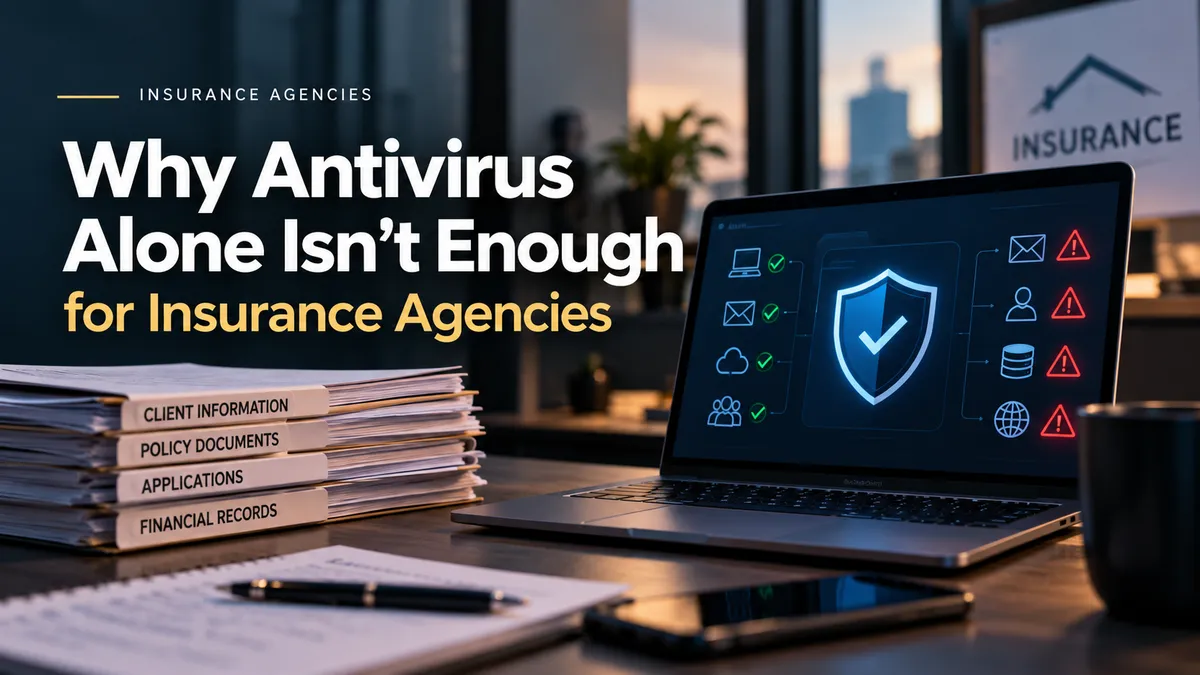
Why Antivirus Alone Isn't Enough for Insurance Agencies
Your insurance agency has antivirus. But who's watching?
Your computers have antivirus installed. Your employees use Microsoft 365. You have an IT provider who keeps everything running, fixes technical issues, and makes sure people can get their work done.
So, cybersecurity is taken care of. Right?
Not necessarily.
Antivirus is an important part of protecting your business, but having security software installed isn't the same as having someone actively managing your cybersecurity.
And when your agency handles sensitive customer information every day, that distinction matters.
Antivirus Is a Good Start, Not the Finish Line
Let's get something straight: antivirus isn't useless. Far from it.
Modern antivirus software can detect and block many types of malicious files and suspicious activities. Some solutions even include advanced detection and response capabilities. Keeping these tools updated and properly configured is an important part of protecting your business.
But not every cybersecurity incident starts with someone downloading an infected file.
An employee might enter their password on a convincing fake login page. Someone could gain access to an email account using stolen credentials. An outdated application might have a vulnerability that allows unauthorized access.
Your antivirus might be working exactly as intended while something else is going wrong.
That's why cybersecurity needs more than one layer of protection, and someone making sure those layers are actually working.
The Risks Insurance Agencies Actually Face
Think about how much information moves through your agency every day.
Customer names, addresses, policy documents, applications, financial details, and, depending on the business you write, sensitive personal information.
Your employees exchange emails with customers, carriers, MGAs, and other business partners. They access agency management systems, download attachments, share documents, and work across different applications.
It's all part of running an insurance agency. But it also means a security problem can affect more than just one computer.
A Compromised Email Account
Imagine someone gains access to an employee's Microsoft 365 account.
They could read customer communications, access attachments, create forwarding rules, or send convincing messages from a legitimate agency email address.
Meanwhile, the employee's computer might have perfectly functioning antivirus software. The problem isn't necessarily on the computer. It's in the account.
Would your agency recognize suspicious sign-ins or unusual account activity? More importantly, if someone noticed, who would investigate?
An Unpatched System
Your agency uses several computers, applications, and cloud services. Some receive updates automatically, while others might need manual attention.
A device that hasn't been used in weeks could be missing important security updates. An application might have a known vulnerability that hasn't been addressed.
Antivirus doesn't eliminate vulnerabilities in other software.
Someone needs to identify which systems are affected, determine which issues matter most, and follow up to make sure the appropriate fixes actually happen.
Because finding a vulnerability doesn't help much if nobody does anything about it.
A Security Alert Nobody Follows Up On
Let's say a security tool detects suspicious activity and generates an alert.
Who receives it? Does anyone investigate? Can they tell the difference between a false alarm and a genuine incident?
And if the activity turns out to be serious, does your agency know who to contact and what happens next?
Having security tools is important. Knowing what happens when those tools identify a problem is just as important.
Your IT Provider and Your Cybersecurity Provider Don't Have to Be the Same
Most insurance agencies already have someone handling their technology, whether that's an internal employee, a local IT company, or a managed service provider.
And that's perfectly fine.
Your IT provider might manage computers, Microsoft 365, backups, software updates, and day-to-day technical support. Some IT providers also offer excellent cybersecurity services.
The important thing isn't the title of the company you're paying. It's understanding which security responsibilities are actually covered.
Who reviews security alerts? Who checks whether vulnerabilities are being addressed? Who evaluates your agency's cybersecurity risks? Who coordinates the response if an account is compromised?
Those responsibilities might already be included in your IT agreement. Or they might not.
You shouldn't have to find out after something goes wrong.
What Does Ongoing Cybersecurity Actually Look Like?
A smaller insurance agency doesn't necessarily need an internal security department. But it does need a way to manage security risks consistently
That usually involves several activities working together.
Endpoint protection and monitoring. Security tools help identify suspicious activity on computers and other devices. Depending on the solution and service arrangement, alerts can be investigated and escalated when action is needed.
Vulnerability management. Regular scanning helps identify outdated software, missing patches, and other weaknesses. Just as importantly, someone needs to prioritize those findings, coordinate with the people responsible for fixing them, and verify that the issues have been addressed.
Account security. Multifactor authentication, appropriate access permissions, and monitoring for suspicious sign-ins can help reduce the risk of compromised accounts.
Incident preparation. Your agency should know who to contact, who makes decisions, and how to coordinate with its technology providers if a cybersecurity incident occurs.
Security oversight. Someone needs to keep track of outstanding risks, follow up on recommendations, and help management understand where improvements are needed.
Notice that none of these activities is simply about installing another piece of software.
The value comes from having a process, and people responsible for following through.
And Then There Are the Carrier Requirements
Cybersecurity isn't only about preventing incidents. Insurance agencies may also need to demonstrate their security practices to carriers, MGAs, business partners, or regulators.
You might receive a questionnaire asking whether your agency uses multifactor authentication, monitors security events, manages vulnerabilities, maintains an incident response plan, or reviews access to sensitive information.
The questions can sound straightforward, until someone asks for evidence.
One challenge we've encountered while helping an insurance agency prepare for a carrier cybersecurity review is that having security measures in place doesn't always mean the agency can readily explain how they're managed or produce the supporting documentation.
That's where ongoing cybersecurity management and compliance preparation start to overlap.
It's not just about checking a box. It's about understanding what your agency has implemented, who's responsible for it, and whether those controls are being maintained.
Insurance-sector cybersecurity requirements also vary by jurisdiction. Depending on where an agency operates and which rules apply, information security programs, incident response procedures, and other safeguards may be regulatory obligations.
But even when a particular requirement doesn't apply, having a clear picture of your cybersecurity makes carrier reviews and security questionnaires much easier to handle.
Instead of scrambling to figure out what you have, you already know.
If you've ever received a lengthy cybersecurity questionnaire from a carrier, you know how quickly a few seemingly simple questions can turn into a search for policies, screenshots, and supporting documentation.
We've covered that challenge in more detail in our article on carrier cybersecurity questionnaires for insurance agencies.
Three Questions to Ask Your IT Provider
You don't need to become a cybersecurity expert to start asking better questions. Here are three worth bringing up with whoever manages your agency's technology.
1. If one of our computers or Microsoft 365 accounts shows suspicious activity, who investigates it?
Ask what gets monitored, who receives alerts, and what happens when something needs attention.
2. How do we identify and address security vulnerabilities?
Find out whether your provider performs vulnerability scanning, how issues are prioritized, and who follows up to make sure they're resolved.
3. If we experience a cybersecurity incident tomorrow, who do we call and what happens next?
Make sure responsibilities, contact information, escalation procedures, and response expectations are clear.
If your provider has solid answers, great. That's exactly what you want.
If the answers are unclear, you've identified a good place to start improving.
Cybersecurity Shouldn't Be Another Headache
You have customers to serve, policies to manage, and a business to grow. Investigating security alerts, tracking vulnerabilities, and figuring out who's responsible for what probably aren't how you want to spend your day.
And they shouldn't have to be.
But cybersecurity doesn't take care of itself just because antivirus is installed. It requires attention, coordination, and someone making sure important issues don't fall through the cracks.
The good news is that you don't necessarily need to replace your IT provider or build an internal security team to get there.
At CGServices, we help insurance agencies and brokers manage cybersecurity risks, prioritize improvements, and coordinate with their existing technology providers. We also help agencies stay prepared for the security and compliance requirements that come with doing business in the insurance industry.
Focus on your business. We handle the rest.
Not sure whether your agency has everything covered? See how we can help.